All things considered, it doesn't look too shabby either...
 |
| Great detail on the flag. |

|
| Great detail on the flag. |

In the latter part of August, 1864, his regiment moved to the right in front of Richmond at Deep Bottom. It was at this point that his regiment made its brilliant and famous charge on the 29th day of September, 1864. And it was there that Sergeant Major Holland led the assaulting company of his regiment in their famous charge. Brilliant as had been its past record, and courageous as the men had shown themselves to be on other fields, this one occasion seems to have been reserved as the crucial test of their fighting qualities. When they met the enemy, they fought hand to hand with a desperate valor that beggared description. The shot and shell of the enemy mowed down the front ranks of the colored troops like blades of grass beneath the sickle’s deadly touch. But, with a courage that knew no bounds, the men stood like granite figures. They routed the enemy and captured the breastworks. The courage displayed by young Holland’s regiment on this occasion called for the highest praise from General Grant who personally rode over the battlefield in company with Generals Butler and Draper.
Holland was wounded in this battle but did not leave the field. Later in the day the regiment made a charge at Fort Harrison to relieve a brigade of white troops that was unable to get back to the Union lines.
Immediately after the charge at New Market Heights, Holland was examined on the field by order of General Butler and passed for captain, but was, on account of color, refused his commission by the War Department. Twice he was presented with medals which were awarded him for bravery and distinguished services on the field of battle. One of these medals was voted him by Congress and forwarded to him through President Lincoln, and the other was awarded by General B. F. Butler [the Congressional Medal of Honor and the Butler Medal.]
He served with his regiment at Dutch Gap until October 4th, when the regiment went over to Fair Oaks, or Seven Pines, where the Union forces achieved a victory of which they were afterwards deprived by a successful ruse of the enemy.
In December, 1864, the regiment went with the great naval fleet under General Butler to Fortress Fisher at the attempt to break up the blockade-running. [When the] regiment landed at Fortress Fisher, they were compelled to withdraw on account of the insufficiency of support. They returned in January, 1865, under command of General Terry when this fort was captured.
He was with his regiment on its marches through Wilmington, Bentonville, Goldsboro, and Raleigh. He was present when General Joseph E. Johnston surrendered to General W. T. Sherman, and it was here that his regiment received the sad tidings of the death of President Lincoln, when men of iron nerves shed tears like broken-hearted children.

 |
| Passing the 13th Amendment is hard work. |
It's an all-black movie. There's no major white roles in it at all. It's one of the first, all-black action pictures ever made. It's not Glory where you have a lot of white officers running these guys into cannon fire. They were real heroes.While Lucas was making a decent point about how Hollywood has largely ignored the important role that African Americans have played in many of the nation’s conflicts, I don’t think he had to disparage one film in order to promote his own.

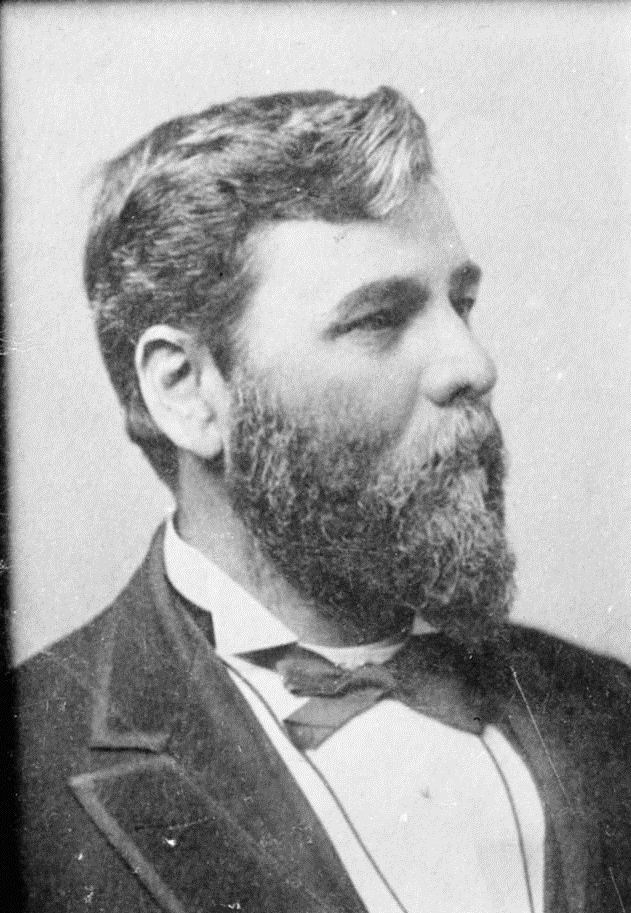
Milton M. Holland was born in the state of Texas in 1844. He was attending school in Athens County, Ohio, in 1861 when the first call was made for volunteer soldiers, and responded to the call of his country. He enlisted in the Union Army in April, 1861, but was rejected on account of his youth. But so determined was he to serve his country that he immediately sought employment in the Quartermaster Department and served under Colonel Nelson H. Van Hores of the 3rd, 18th, and 92nd Ohio Volunteer Infantry.
He served in this capacity until he was regularly mustered into the Union Army in June 1863 and assigned to the 5th United States Colored Troops, a regiment raised in Ohio and accredited to that state. Within his regiment he engaged in the campaigns in Virginia and North Carolina under the command of General B.F. Butler. In the winter of 1863 he was with his regiment in the raid through the Dismal Swamp into North Carolina, capturing forage and emancipating slaves under the then recent Emancipation Proclamation.
In the early winter and spring of 1864, he was with his regiment in the two raids from Yorktown, Virginia to Bottom’s Bridge just outside Richmond: the first raid being made for the purpose of liberating the Union prisoners confined at Libby Prison; and the second for the purpose of assisting General Kilpatrick who, in his attempt to relieve the Libby Prison men, had been surrounded by the Confederate forces.
He was with the James River fleet in its advance on Richmond and, as the fleet approached City Point, Company C, of which Holland was then the 1st Sergeant, was ordered to make the attack. The order was promptly obeyed and, without landing the vessel, the men jumped from the guard rail of the boat, wading water waist deep to reach the point of attack. They captured the Rebel flag, the signal; station and signal officers of the confederacy, thus stricking [sic] the first signal blow at the Rebel stronghold at Petersburg.
This regiment was part of the famous Black Brigade which General Smith at first refused to use in his charge on Petersburg on June 15, 1864. General Butler, commanding the corps, promptly ordered General Smith to march on Petersburg and storm her breastworks. General Smith led the black phalanx in the charge, and for the courage, the heroism, the daring and skill displayed by the colored troops in that bloody fight, General Smith remarked that he would lead men like those into any fight and rely upon their pluck.
His regiment was at the ‘Mine Explosion’ [The Battle of the Crater] on July 30, and was prepared to make the charge. They received instructions at a given signal to discharge their guns onto the enemy’s line, jump the parapet and the ditch, and make a charge to cover the ‘Crater’. But just before the signal was substituted in their place. This circumstance, young Holland has ever maintained, lost a key to the Union forces that otherwise would have been gained. It was at this battle that Holland had planned and decided to cover himself in glory. He was sorely disappointed but never relinquished the desire and intention to avail him of the first opportunity.
 |
| 1st Sgt. Milton M. Holland, wearing his Medal of Honor. Courtesy Rob Lyon. |

